


Consultation hotline
Disinfection Equipment
Common disinfection equipment used for water purification includes chlorine dioxide disinfection systems, flow-through ultraviolet (UV) sterilizers, and ozone disinfection systems. Each type of disinfection equipment has its own advantages and disadvantages. To achieve optimal disinfection results, it is necessary to select different disinfection equipment based on the specific requirements of different industries.
Category:
Disinfection Equipment
Keywords: water purification equipment, pure water equipment, design and manufacturing of purified water equipment
Consultation hotline
Contact Us
Product Description
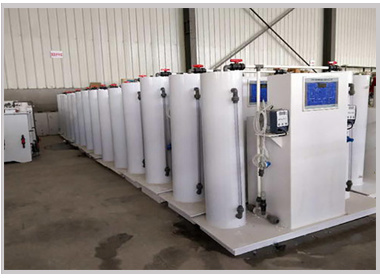 |
▶ Chlorine Dioxide Disinfection Equipment: Chlorine dioxide disinfection equipment adds a chlorine dioxide disinfectant to the finished water. The chlorine dioxide disinfectant dissolves in the water to achieve disinfection purposes. Chlorine dioxide disinfection is not easily decomposed. A certain residual amount of chlorine dioxide remains in the finished water, allowing for continuous disinfection of the water quality and preventing secondary contamination of the finished water. Therefore, chlorine dioxide disinfection is often used for disinfecting domestic tap water and sewage, suitable for water bodies where the requirements for the finished water are not extremely strict. |
|
|
|
||
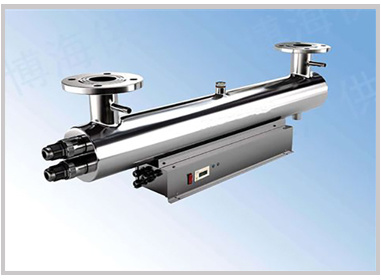 |
▶ Flow-Through Ultraviolet (UV) Disinfection Equipment: Flow-through UV sterilizers are equipped with high-transmittance quartz glass sleeves, achieving a light transmittance of over 87%. After 8,000 hours of germicidal life, the irradiation intensity remains stable at 253.7 nm. The unique high-brightness mirror-finished sterilization reaction chamber design increases the sterilization intensity by 18-27%, achieving a sterilization rate of up to 99.99%. It can quickly and effectively kill various bacteria, viruses, and other microorganisms. Through photolysis, it can effectively degrade chlorides in the water. It features simple operation, easy maintenance, a small footprint, high treatment capacity, no pollution, strong environmental friendliness, no toxic side effects, low investment cost, low operating cost, and convenient equipment installation. However, due to the non-continuous nature of UV sterilization and its low transmittance in highly turbid water bodies, resulting in unsatisfactory sterilization effects, flow-through UV sterilizers are often used for disinfecting finished water that is relatively clear. |
|
|
|
||
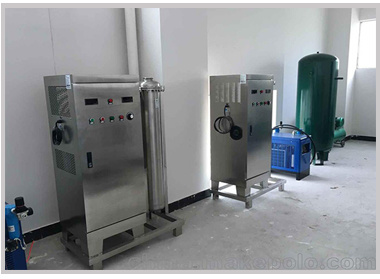 |
▶ Ozone Disinfection Equipment: An ozone generator is a device used to produce ozone gas. Ozone is unstable and decomposes easily, making it impossible to store; it must be generated and used on-site (except for short-term storage under special circumstances). Therefore, any location requiring ozone needs an ozone generator. Ozone has a half-life of approximately 6-8 hours, after which it decomposes into oxygen. This gives ozone disinfection the advantage of being continuous while also avoiding secondary contamination of the finished water. As a result, ozone is most widely used in the disinfection of packaged drinking water. It is also extensively applied in fields such as wastewater treatment, industrial oxidation, food processing and preservation, bioengineering synthesis, and space sterilization. |
Previous page
MORE PRODUCTS
- More products -
Listen to the voice of every customer.
LISTEN TO THE VOICE OF EVERY CUSTOMER


Contact Us
Guangxi Jonline Technology Co., Ltd.
Company Address: No. 14, 1st Floor, Factory No. 2, Phase I, ASEAN International Smart Park, No. 43 Anji Avenue, Nanning City
Factory Address: No. 14, 1st Floor, Building No. 2, ASEAN International Smart Park (Phase I), No. 43 Anji Avenue, Nanning City
Phone:18249982787
Email:876089222@qq.com
WeChat Official Account