


Consultation hotline
Drinking Water Purification Equipment
Drinking water generally comes from four types of water sources: river water, reservoir and lake water, well water, and deep spring water. Relatively speaking, deep underground spring water is an ideal source for drinking water. Its turbidity and microbial indicators are relatively low, and it is rich in mineral content. (However, if heavy metal contamination is present, its use is not recommended.)
Category:
Drinking Water Purification Equipment
Keywords: water purification equipment, pure water equipment, design and manufacturing of purified water equipment
Consultation hotline
Contact Us
Product Description
"While river water, reservoir and lake water, and well water mostly belong to surface water sources, their water quality turbidity and microbial conditions are unstable. During the rainy season and flood periods, both turbidity and microbial contamination become more severe. Therefore, when implementing a water purification project, it is essential to obtain water quality test data from the pollution period based on the specific water source conditions. This allows for the reasonable design of the purification process and the appropriate selection of purification equipment, avoiding resource waste or situations where the treatment fails to meet standards, which could compromise the safety of residents' drinking water.
There are two commonly used processes for drinking water treatment, typically referred to as integrated water purification equipment: the gravity type and the pressure type.
First, the gravity-type integrated water purification equipment (as shown in the figure)"
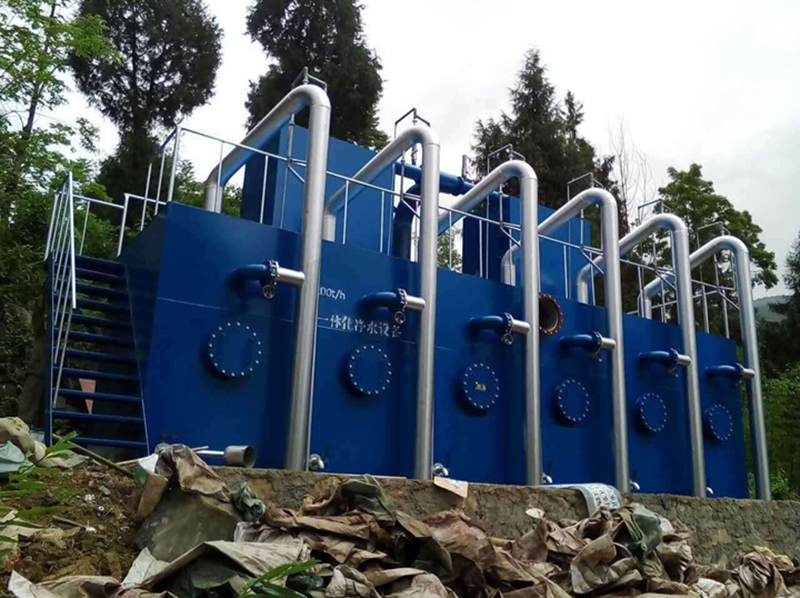
Gravity-type integrated water purification equipment is mainly divided into three units:
One is the coagulant (PAC) reaction unit, commonly referred to as the reaction tank. Its main function is to allow the water body to fully contact and react with the coagulant. Guide walls are typically designed within this unit. In this stage, a specific dosage of coagulant needs to be added to the water based on the water quality conditions using a metering pump; therefore, electrical energy is utilized in this unit.
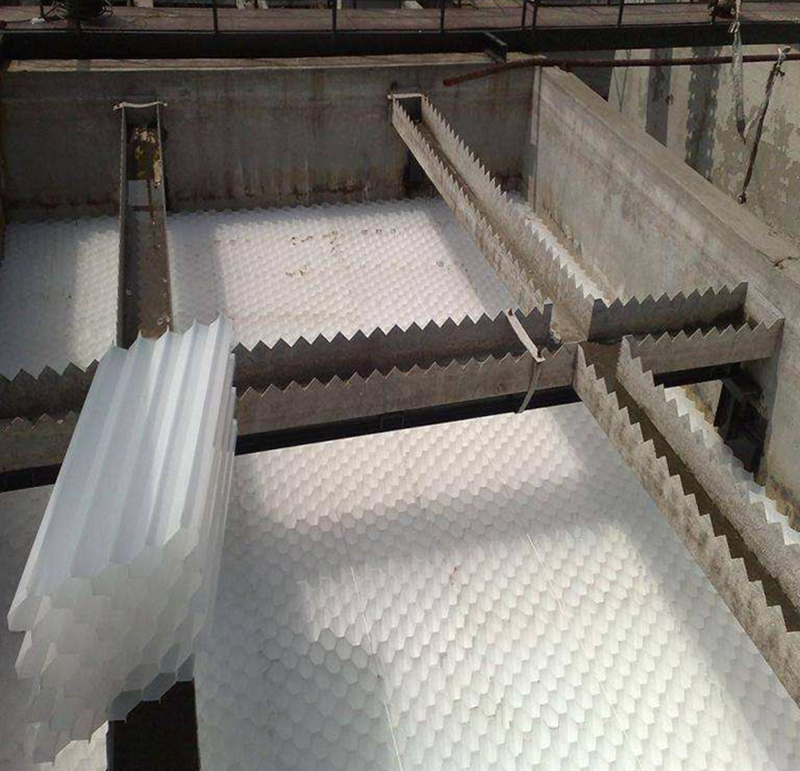
The second is the sedimentation unit, commonly known as the sedimentation tank. The general hydraulic retention time for the sedimentation unit is about 3 hours. However, to reduce the hydraulic retention time and lower construction costs, inclined tubes (or tube settlers) are often installed inside the sedimentation tank (as shown in the figure). These inclined tubes can promote the sedimentation of silt.
The third is the filtration unit. The main process adopted in the filtration unit is the valveless filter tank. The filter media in the tank include quartz sand and activated carbon, among others. When the filter layer becomes clogged, the valveless filter tank utilizes siphonic action to perform automatic backwashing, without requiring any additional equipment or energy consumption. The concentrated water, containing a higher amount of sediment flushed out during this process, is also automatically discharged from the system.
The advantage of gravity-type integrated water purification equipment is that the entire system's operation relies entirely on the natural force of gravity. Apart from the metering pump used for adding the coagulant, the energy consumption is very low. However, the overall hydraulic retention time is approximately 1 hour, the equipment has a large footprint, and the initial investment cost is relatively high. Additionally, the system has a poor resistance to冲击 loads (shock loads). Therefore, it is often used for treating surface water sources such as reservoirs and lakes.
The other type of integrated water purification equipment is the pressure type (as shown in the figure):
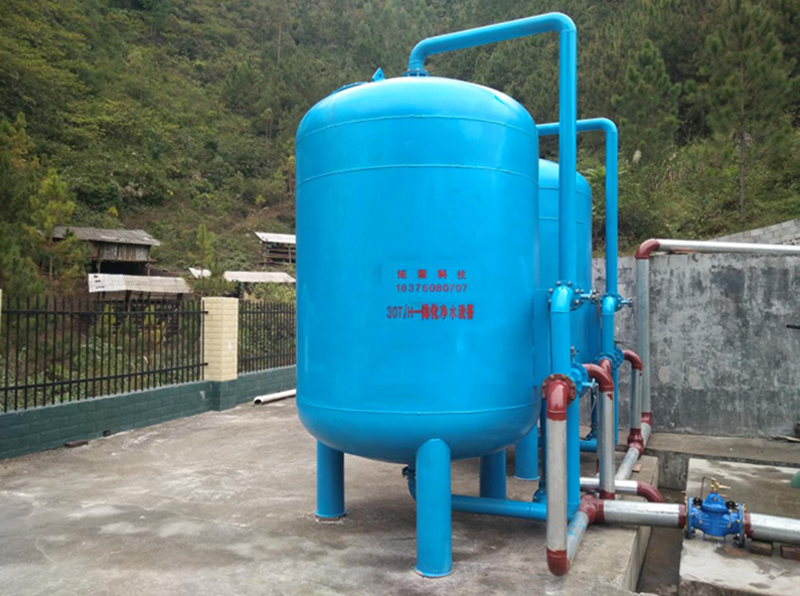
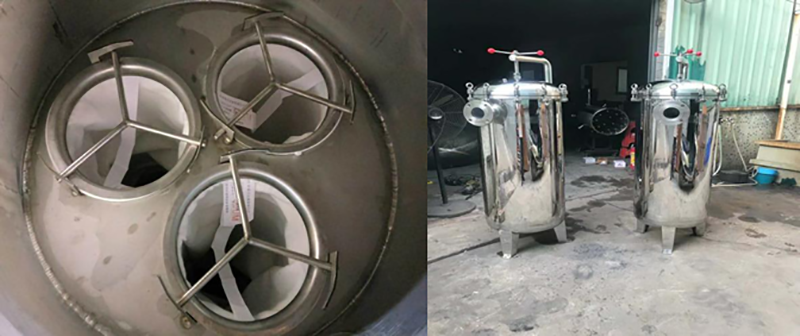
The pressure tank is filled with filter media such as quartz sand and activated carbon, offering high filtration precision. Under normal circumstances, water relying solely on its own gravitational force generally cannot penetrate the filter media layer, or the flow rate would be extremely low. Therefore, when using pressure-type integrated water purification equipment, a water-lifting pump must be used. The water pressure entering the filter tank should be no less than 0.1 MPa, but it must not exceed 0.6 MPa, with a normal operating pressure of around 0.3 MPa being optimal.Pressure-type integrated water purification equipment can be used in conjunction with bag filters and cartridge filters (as shown in the figure), depending on the turbidity level of the raw water source. This ensures that the produced water quality meets the turbidity standards for drinking water.
The pressure-type integrated water purification equipment system offers numerous advantages, such as a small footprint, low initial investment, and simple and convenient equipment installation and commissioning. Additionally, the system possesses strong impact resistance. Even when the raw water has high turbidity or contains some sediment, the pressure-type integrated water purification equipment can fully handle it through proper design. For this reason, in modern drinking water treatment processes, the pressure-type integrated water purification equipment process is widely adopted.
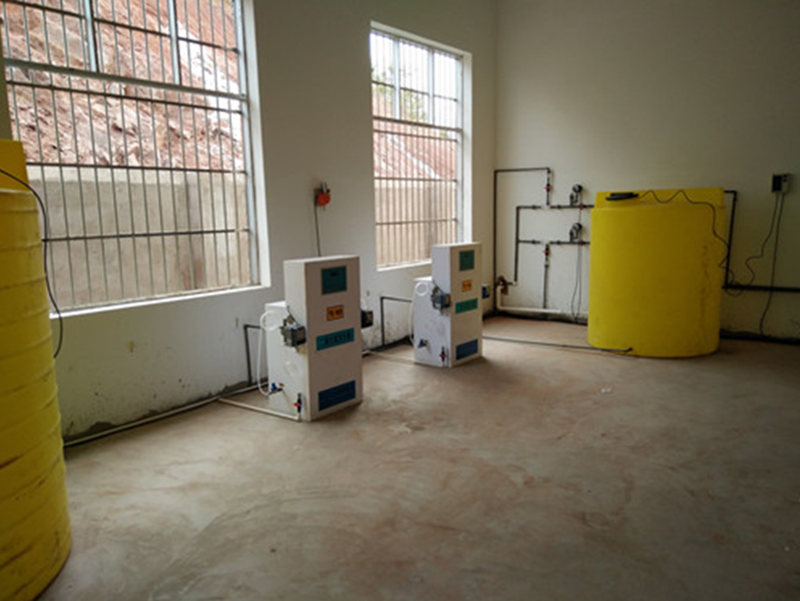
Of course, whether using pressure-type or gravity-type equipment, both need to be used in conjunction with disinfection equipment. For drinking water disinfection, chlorine dioxide generators or chlorine dioxide dosing devices are commonly used (as shown in the figure).
Of course, the process flow for all water purification equipment must be designed based on the specific conditions of the raw water source; it cannot be developed in isolation. At the same time, it is also necessary to understand the site conditions, power supply situation, and other factors. While ensuring that the water quality requirements are met, full consideration should be given to the proportion of human and financial resources invested to reduce unnecessary expenses.
To learn more details about integrated water purification equipment, receive a free customized proposal, or arrange a free on-site project inspection, please contact us immediately by phone: 0771-3865273 / 18174741747
Previous page
MORE PRODUCTS
- More products -
Listen to the voice of every customer.
LISTEN TO THE VOICE OF EVERY CUSTOMER


Contact Us
Guangxi Jonline Technology Co., Ltd.
Company Address: No. 14, 1st Floor, Factory No. 2, Phase I, ASEAN International Smart Park, No. 43 Anji Avenue, Nanning City
Factory Address: No. 14, 1st Floor, Building No. 2, ASEAN International Smart Park (Phase I), No. 43 Anji Avenue, Nanning City
Phone:18249982787
Email:876089222@qq.com
WeChat Official Account