


Consultation hotline
What are the types of softened water?
Release time:
2026-02-26 16:36
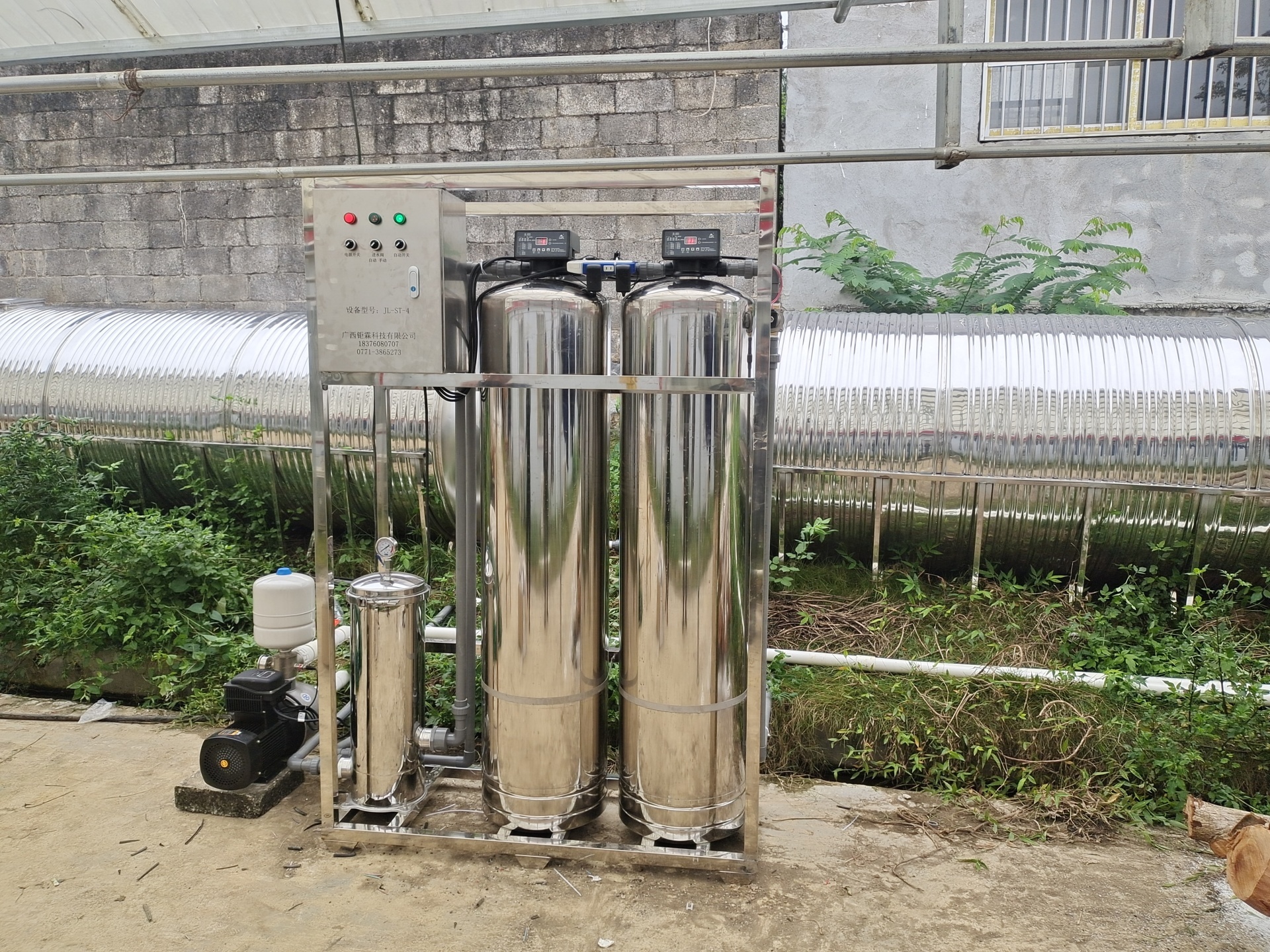
A water softener is a device used to reduce water hardness, primarily by removing calcium and magnesium ions from the water. It can be used as a water supply for systems like air conditioners, as well as for the softening and treatment of domestic water. So, what are the different types of softened water systems? Below, Nanning Water Purification Equipment will introduce them.
1. Manual Type
This is a traditional standard method, mainly available in two forms: co-current flow and counter-current flow without pressure. Typically, two tanks with carbon steel structures are connected in parallel. According to the process flow, each tank should be equipped with 8 to 11 manual valves (two tanks require about 16 to 20 valves). A dedicated salt pump is used to pump the dissolved salt from the regeneration process into the resin tank. This equipment was the main type of water softener in China. The main characteristics of this type of softening system are: the process is simple and easy to understand, the operation is convenient, and the cost is low, making it suitable for high-flow requirements. However, the technology is outdated, the footprint is large, and the operational consumption is high. It is relatively labor-intensive to operate, the salt pump is prone to severe corrosion, and maintenance costs are high.
2. Combined Automatic Type
Due to the complexity of using manual equipment, a new type of equipment centered around a complex integrated valve emerged in China in the early 1990s. The key component of this water purification equipment is a multi-channel integrated valve, which changes the direction of water flow through the rotation of the valve body. This machine has a much smaller footprint and a higher degree of automation compared to traditional manual machines. However, because the control method uses time-based control, the control precision during operation is relatively low. Due to limitations in design concepts, processing technology, and materials, the flat integrated valves used on most equipment are prone to wear. Once worn, their repairability is very low. Currently, there are many manufacturers producing this type of equipment in the domestic market, and the actual quality of their products varies widely. The operational performance of many devices is unsatisfactory, failing to achieve full functionality.
In Europe and the United States, the automated design of ion exchange devices began in the 1960s. With the development of industrial technology, multi-port valves and integrated valves, distinct from domestic multi-port valves, gradually evolved. These multi-port valves are primarily made of engineering plastics and lead-free brass. Their core component is a multi-channel integrated valve, usually using a single valve plate or piston to control the water flow direction, driven by a small motor that moves a camshaft (or piston). Due to the better development of industrial technology abroad, this type of purified water equipment has been well-developed. Product specifications range from 0.2 t/h for household use to about 70 t/h for industrial use, and the controllers have a high level of sophistication.
3. Automatic Type
Individual valves in fully automatic treatment equipment generally use imported diaphragm valves or solenoid valves. The water softener is composed of a structure similar to the conventional manual method and a dedicated fully automatic controller (microcontroller or PLC). Fully automatic water treatment equipment is mainly used for high flow rates and can also be used for the modification of existing manual equipment. It can be converted into automated equipment without changing the original equipment piping. Therefore, it reduces the labor intensity of operation and lowers equipment consumption.
Previous page
More news


Contact Us
Guangxi Jonline Technology Co., Ltd.
Company Address: No. 14, 1st Floor, Factory No. 2, Phase I, ASEAN International Smart Park, No. 43 Anji Avenue, Nanning City
Factory Address: No. 14, 1st Floor, Building No. 2, ASEAN International Smart Park (Phase I), No. 43 Anji Avenue, Nanning City
Phone:18249982787
Email:876089222@qq.com
WeChat Official Account