


Consultation hotline
The difference between general pure water equipment and ultrapure water equipment
Release time:
2026-02-26 17:08
In practical applications across production and daily life, we encounter the distinction between general pure water equipment and ultrapure water equipment. One might assume their working principles and processes are very similar, both being water purification equipment and essentially the same. However, the price difference between ultrapure water equipment and general pure water equipment is significant. The technology, manufacturing, installation, and maintenance of ultrapure water equipment are much more complex. The main differences between the two lie in:
I. Different Processes
-
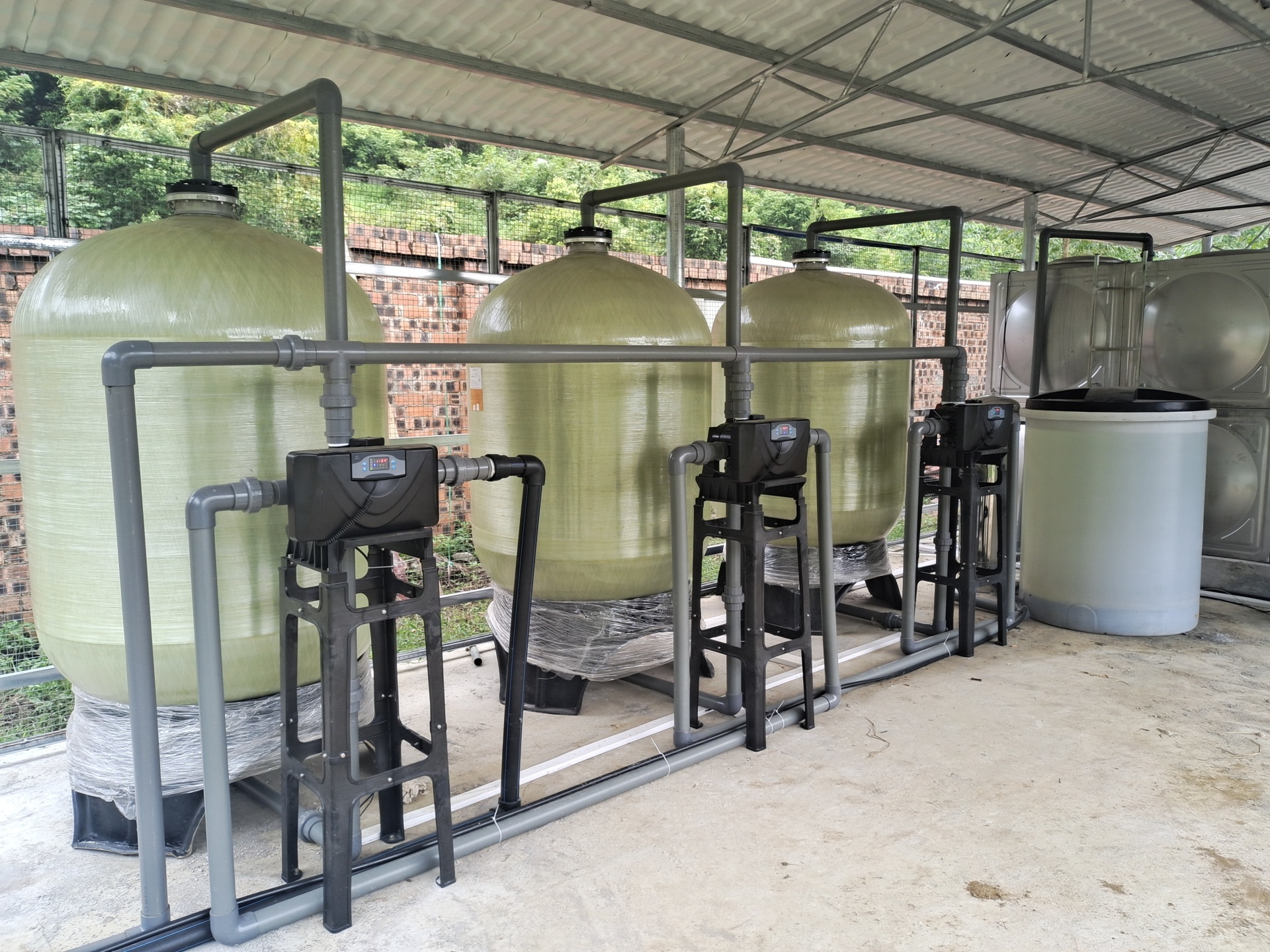
The process for general pure water equipment primarily relies on reverse osmosis (RO) membranes, using sand, carbon, and softening resin as pretreatment filters. The final stage often includes ozone or UV sterilizers for disinfection.
-
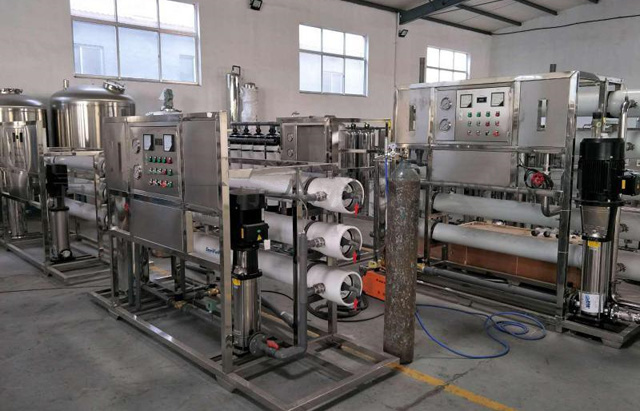
Ultrapure water equipment, on the other hand, primarily utilizes an EDI system combined with RO membrane filtration. It also uses sand, carbon, and softening resin as pretreatment filters. The pure water produced after passing through a cartridge filter serves as the feed water. Depending on the required effluent quality, processes such as single-stage RO + EDI or two-stage RO + EDI are employed to meet ultrapure water standards.
II. Different Effluent Water Quality
General pure water equipment is typically equipped with a conductivity meter, allowing real-time monitoring of whether the treated water quality meets user requirements. For general drinking water, the requirement after treatment by pure water equipment is usually a conductivity of <10 μS/cm, which satisfies the needs of most customers. For general industrial water, the requirement after treatment by pure water equipment is typically a conductivity of <20 μS/cm, though the actual need depends on the specific usage conditions of different enterprises.
Most ultrapure water equipment, however, is equipped with not only a conductivity meter but also a resistivity meter. Depending on the different requirements of various enterprises' production situations, the resistivity requirements after treatment by ultrapure water equipment vary. Generally, the water quality produced by a single-stage RO + EDI system can reach 10-12 MΩ·cm. The water quality produced by a two-stage RO + EDI system can reach 15-18 MΩ·cm, adapting to environments with even higher water quality demands. The key to choosing between pure water equipment and ultrapure water equipment ultimately depends on the customer's specific application.
More news


Contact Us
Guangxi Jonline Technology Co., Ltd.
Company Address: No. 14, 1st Floor, Factory No. 2, Phase I, ASEAN International Smart Park, No. 43 Anji Avenue, Nanning City
Factory Address: No. 14, 1st Floor, Building No. 2, ASEAN International Smart Park (Phase I), No. 43 Anji Avenue, Nanning City
Phone:18249982787
Email:876089222@qq.com
WeChat Official Account