


Consultation hotline
How to properly use automatic water softening equipment
Release time:
2026-02-26 16:35
Today, more and more families and companies are using fully automatic water softening equipment because it is convenient, simple, reliable, and easy to operate. Importantly, it also protects the water environment. To utilize automatic water treatment equipment effectively and extend its lifespan, regular and timely maintenance is essential. For better use of automatic softening equipment, daily maintenance and care must be carried out.
1. Use and Maintenance of the Salt Tank
The system is equipped with a salt dissolving tank. Its main function is regeneration. The tank is typically made of PVC, stainless steel, or other materials. To keep it clean, it should be cleaned regularly during long-term use.
2. Use and Maintenance of the Softening Tank
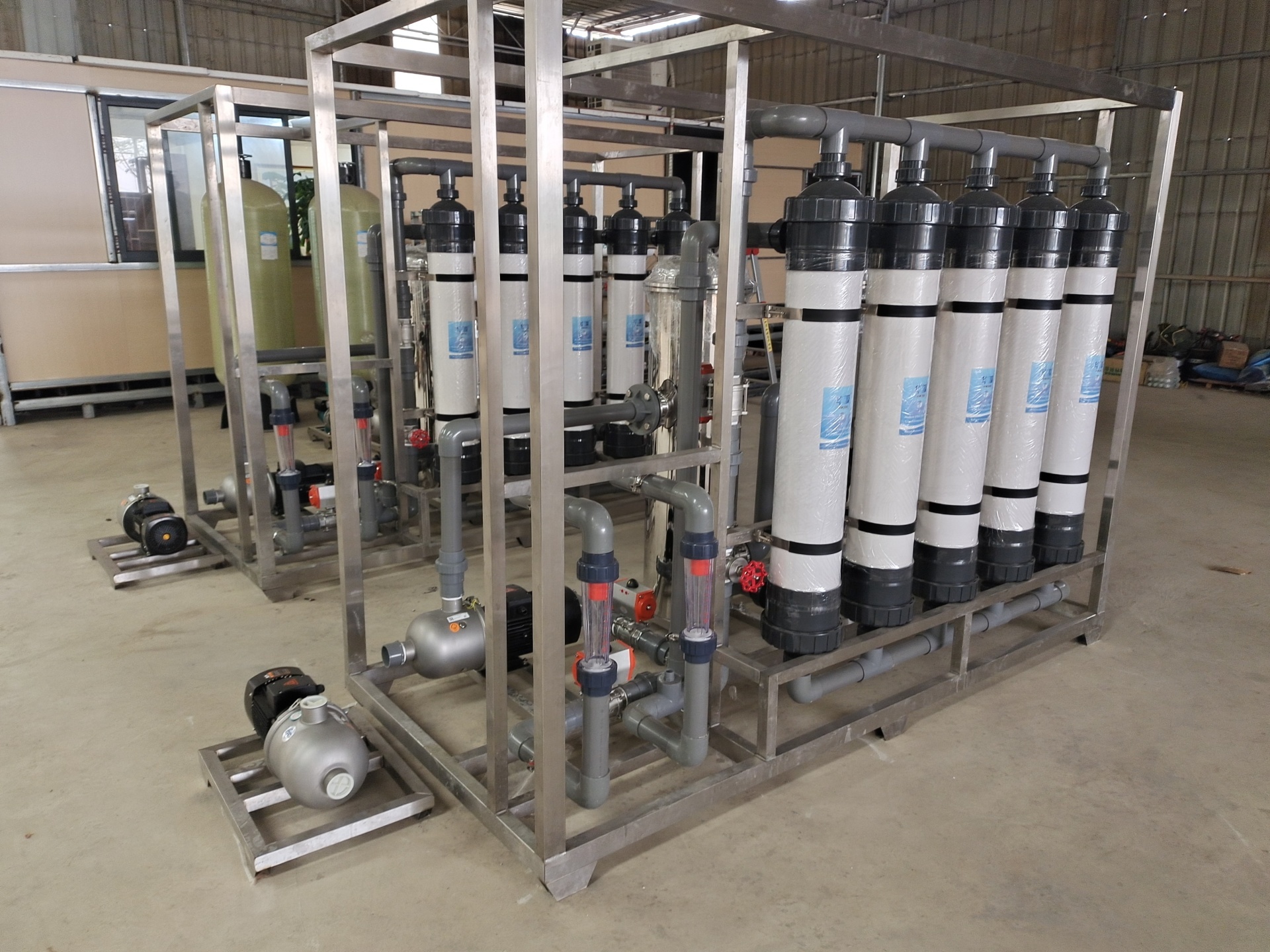
This is the key sealed device in the process of preparing softened water. It is made of reinforced plastic materials like stainless steel and fiberglass, containing a specific amount of resin to replace cations. Their main function is that when raw water flows through the resin layer, the cation resin in the water undergoes an exchange reaction, reducing the calcium and magnesium ions in the water. This provides clients with softened industrial water that meets standards.
After Nanning water purification equipment has run for a certain period, when the resin's capacity for exchanging with magnesium and calcium ions is saturated by the water, the salt tank will automatically supply water to the ion exchange resin at this time. It uses brine for re-manufacturing to restore the resin's exchangeability.
3. Selection of Resin
The general principle for resin selection is to choose a resin with a high exchange capacity, high mechanical strength, uniform particle size, and good heat resistance. When selecting the resin used for the cation layer, the wet actual density can vary greatly, but it must be a strong acid resin type.
Pre-treatment of New Resin. New resin contains excess raw materials, new compounds, incomplete reaction products, etc. When the resin comes into contact with water, acid, alkali, or other solutions, these compounds can enter and contaminate the solution. Discharge of wastewater affects the performance and lifespan of the process. Therefore, new resin must be pre-cleaned before use.
The selection and pre-treatment methods for new resin vary depending on the specific situation. The specific operation process should be carried out under the guidance of specialized technical personnel.
4. How to Store Ion Exchange Resin
(1) Frost Protection: The storage condition for resin should be at ambient temperature. If the temperature is too low, to prevent the resin from freezing, it can be placed in a salt solution.
(2) Drying Prevention: During use, storage, and transportation, if the resin loses moisture, it can cause the resin volume to expand and contract, leading to degradation or decreased mechanical strength, and reduced ion exchange capacity. If this occurs, do not put the resin directly into water. Instead, first soak it in a saturated salt solution to allow it to slowly expand without cracking.
(3) Mold Protection. If ion exchange resin is not used in the heat exchanger for a long time, it can promote moss growth and bacterial (reproduction), leading to mold contamination of the resin. Therefore, regular water changes and flushing are necessary.
Previous page
Next page
Previous page
Next page
More news


Contact Us
Guangxi Jonline Technology Co., Ltd.
Company Address: No. 14, 1st Floor, Factory No. 2, Phase I, ASEAN International Smart Park, No. 43 Anji Avenue, Nanning City
Factory Address: No. 14, 1st Floor, Building No. 2, ASEAN International Smart Park (Phase I), No. 43 Anji Avenue, Nanning City
Phone:18249982787
Email:876089222@qq.com
WeChat Official Account