


Consultation hotline
Pure Water Equipment for the Biotechnology Industry
It is unquestionable that the biotechnology industry has extremely strict requirements for the quality of process water used in production. The quality of the production water directly affects the quality of pharmaceuticals or experimental samples and the accuracy of data. Therefore, the piping materials used in pure water or ultrapure water equipment for the biotechnology industry must be made of SUS304 stainless steel, or even SUS316 stainless steel.
Category:
Pure Water Equipment for the Biotechnology Industry
Keywords: water purification equipment, pure water equipment, design and manufacturing of purified water equipment
Consultation hotline
Contact Us
Product Description
Preventing Pure Water from Secondary Contamination (As Shown in the Diagram):
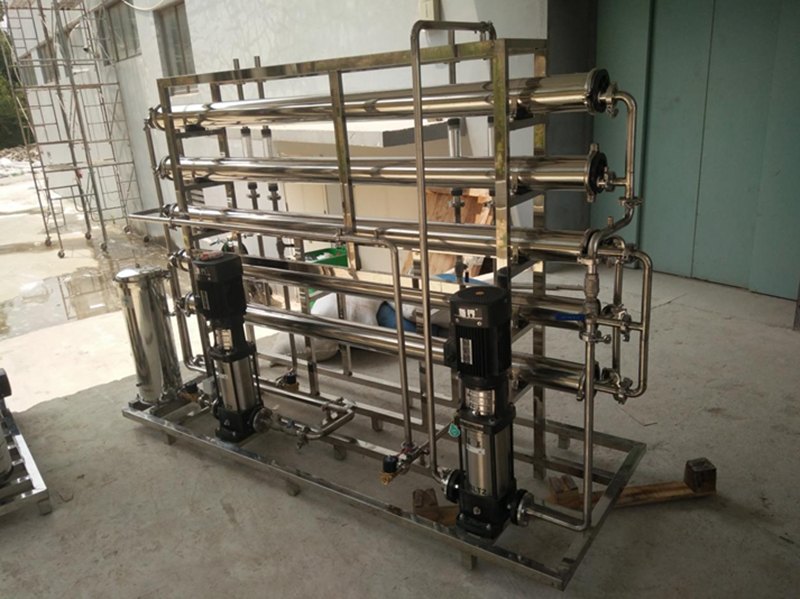
The biotechnology industry imposes strict requirements not only on the piping of water purification equipment but also on the water supply pipelines. During design, clamp-type stainless steel pipelines must be used. When laying the pipelines, a U-shaped installation method is required; otherwise, it will be deemed unacceptable.
Generally speaking, the minimum requirement for process water in the biotechnology industry is water produced by a two-stage reverse osmosis system, with the produced water having a conductivity within 5 μS/cm. Depending on the raw water conditions, the conductivity is typically between 2 and 3 μS/cm, or even lower.
Different biotechnology organizations have varying requirements for water quality. For biotechnology industry applications and the production of oral liquids, ultrapure water must be used as process water. This represents the highest current standard, requiring a resistivity above 17 MΩ·cm. The process used in the water purification equipment combines two-stage reverse osmosis with EDI and a polishing mixed bed, or alternatively, one-stage reverse osmosis with a two-stage mixed bed. The maintenance costs associated with different processes vary: the former involves higher initial equipment investment but lower routine maintenance costs, while the latter has lower initial equipment investment but higher routine maintenance costs.
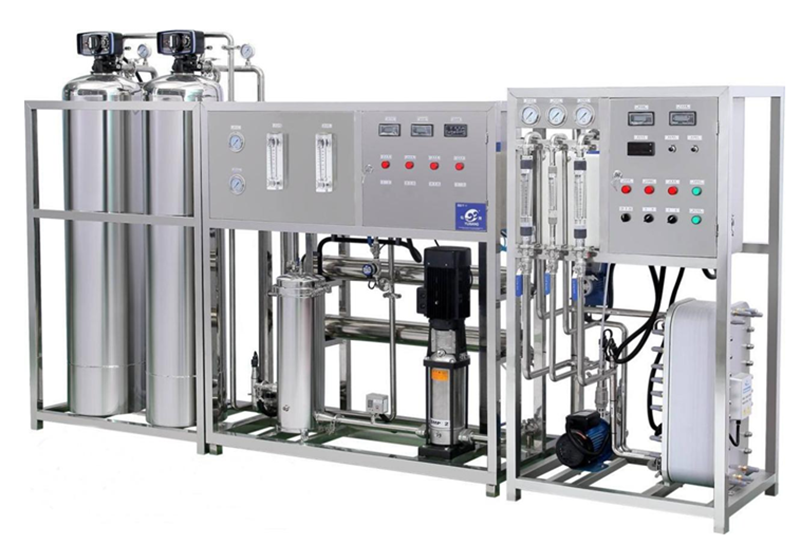
Currently, however, we more commonly use a two-stage reverse osmosis system combined with EDI and a polishing mixed bed. This approach avoids frequent replacement of ion exchange resins, resulting in more stable operation and lower overall comprehensive costs.
Of course, specific situations require specific analysis. To learn more about pure water equipment for biotechnology applications and to obtain a free solution, you can consult us immediately at: 0771-3865273 / 18174741747.
Previous page
MORE PRODUCTS
- More products -
Listen to the voice of every customer.
LISTEN TO THE VOICE OF EVERY CUSTOMER


Contact Us
Guangxi Jonline Technology Co., Ltd.
Company Address: No. 14, 1st Floor, Factory No. 2, Phase I, ASEAN International Smart Park, No. 43 Anji Avenue, Nanning City
Factory Address: No. 14, 1st Floor, Building No. 2, ASEAN International Smart Park (Phase I), No. 43 Anji Avenue, Nanning City
Phone:18249982787
Email:876089222@qq.com
WeChat Official Account