


Consultation hotline
The working principle of water softening equipment
Release time:
2026-02-26 17:11
Since water hardness is mainly caused by and represented by calcium and magnesium, cation exchange resin (softening agent) is typically used to replace the Ca²⁺ and Mg²⁺ (the main components that form scale) in the water. As the resin operates, its effectiveness in removing Ca²⁺ and Mg²⁺ gradually decreases.
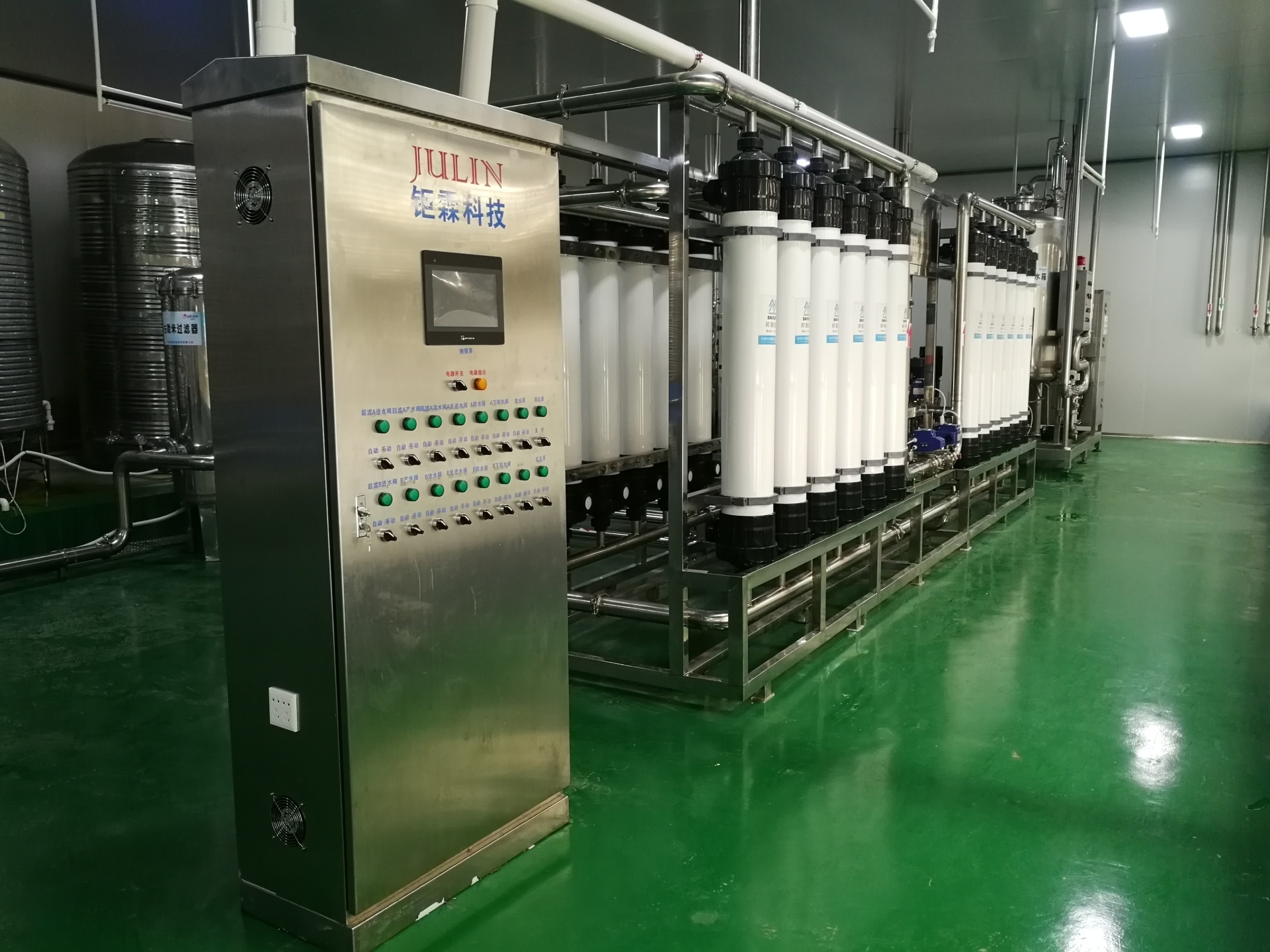
When the resin has absorbed a certain amount of calcium and magnesium ions, the Nanning water purification equipment needs to undergo regeneration. The regeneration process involves rinsing the resin layer with brine (salt solution) from the salt tank. This displaces the hardness ions from the resin, which are then flushed out of the tank with the regeneration wastewater. This restores the resin's softening exchange capacity.
Because water hardness is primarily formed and indicated by calcium and magnesium, the principle of sodium ion exchange softening treatment is applied. Raw water passes through a sodium-type cation exchange resin, causing the hardness components (Ca²⁺, Mg²⁺) in the resin phase and Na⁺ to undergo exchange. This results in the Ca²⁺ and Mg²⁺ being adsorbed onto the resin, thereby softening the water.
The sodium ion exchanger in fully automatic water treatment equipment uses the principle of ion exchange to remove hardness ions like calcium and magnesium from water. When raw water containing hardness ions passes through the resin layer inside the exchanger, the calcium and magnesium ions in the water are displaced by the sodium ions adsorbed on the resin. The resin adsorbs the calcium and magnesium ions, while the sodium ions enter the water, flowing out of the exchanger as softened water that has had its hardness removed.
Softening equipment is a device designed to reduce water hardness, primarily by removing calcium and magnesium ions from the water. During the softening process, this purification equipment does not reduce the total salinity of the water. It can be used as a water supply for systems like air conditioners, as well as for the softening and treatment of domestic water.
Industrial softening equipment can be widely used for softening makeup water in steam boilers, hot water boilers, heat exchangers, evaporative condensers, air conditioners, and direct-fired engines. It is also used for domestic water treatment in hotels, restaurants, office buildings, apartments, and residences, as well as for process water softening in industries such as food and beverage, brewing, laundry, textile printing and dyeing, chemicals, and pharmaceuticals.
Softened water is not suitable for long-term drinking. Water softening equipment uses sodium (Na⁺) ions to replace calcium (Ca²⁺) and magnesium (Mg²⁺) ions. If people consume water with a high sodium salt content over a long period, the sodium component cannot be fully digested and may deposit in the body. An excessively high sodium (Na⁺) level in the human body can increase the risk of cardiovascular and cerebrovascular diseases, such as hypertension, coronary heart disease, and cerebral thrombosis.
以上内容来源于网络,如有侵权可与我们联系删除,谢谢。
More news


Contact Us
Guangxi Jonline Technology Co., Ltd.
Company Address: No. 14, 1st Floor, Factory No. 2, Phase I, ASEAN International Smart Park, No. 43 Anji Avenue, Nanning City
Factory Address: No. 14, 1st Floor, Building No. 2, ASEAN International Smart Park (Phase I), No. 43 Anji Avenue, Nanning City
Phone:18249982787
Email:876089222@qq.com
WeChat Official Account